
Department of Licensing and Consumer Protection
Before a business in the District can obtain or renew their business license, they must prove they have submitted all required tax returns and do not owe substantial debt to the District. Meeting these requirements makes a business compliant with the District’s Clean Hands mandate and allows a Certificate of Clean Hands to be issued. Each year, approximately a quarter of requests for a Certificate of Clean Hands are denied. When a business learns they are not compliant late in the process of renewing their license, it can cause disruptions to their operations. We have designed proactive messages to businesses who are noncompliant and are testing whether these messages help them become compliant sooner. These findings may inform how the District communicates with taxpayers and businesses about upcoming deadlines.
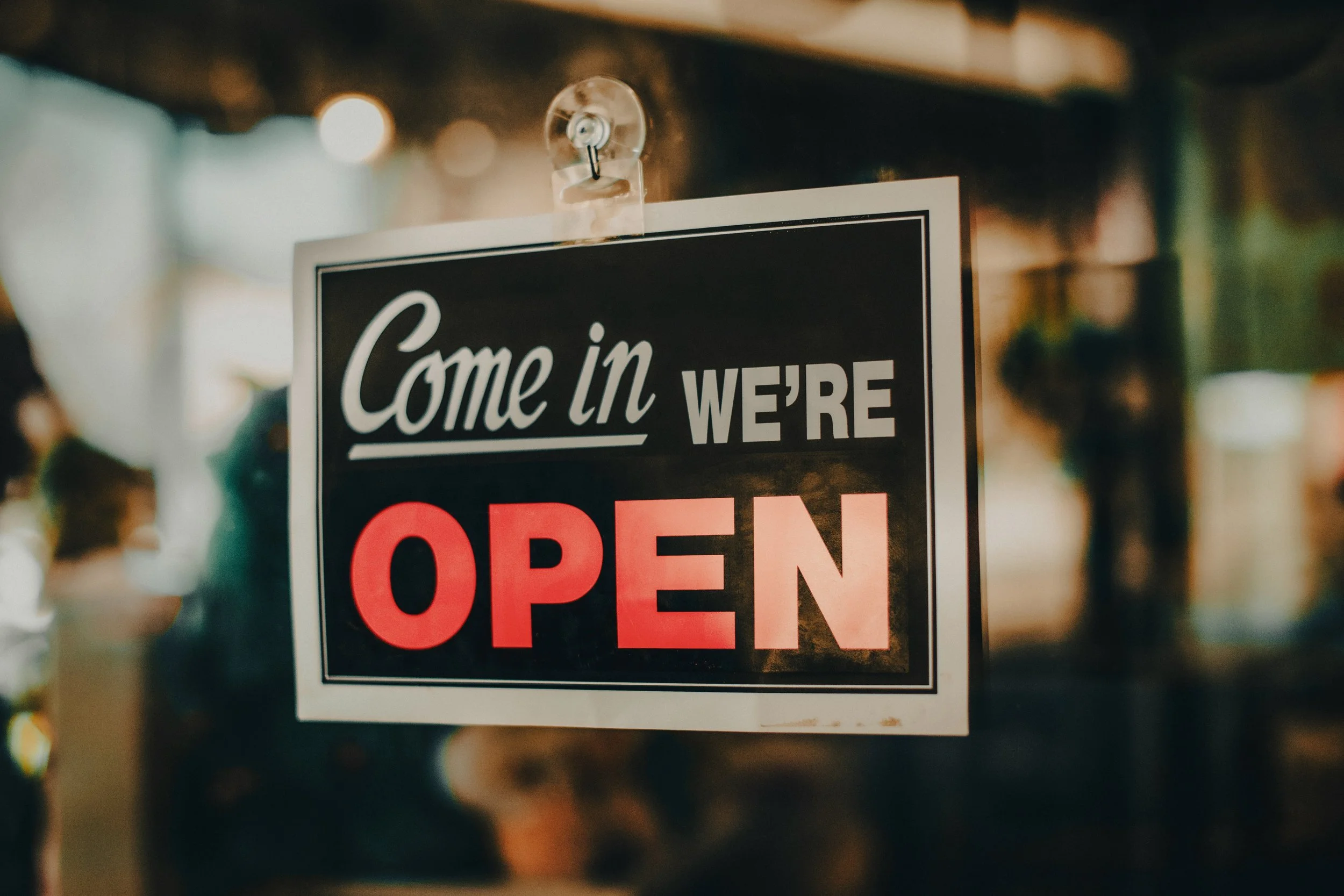
Open sign at a business. (Photo by Tim Mossholder on Unsplash)
Why is this issue important in DC?
Keeping businesses running smoothly is a top priority for the District.1 Local businesses are a vital part of the District’s economy. They provide important services to residents, offer employment, and generate tax revenue that supports government operations. Every business in the District must have a valid business license to operate. To apply for or renew a permit, grant or contract, or, most commonly, a business license from the District, businesses need a Certificate of Clean Hands. This Certificate proves the business has filed all required tax returns and does not owe more than $1,000 in debt to the District.2 The process of requesting a Certificate of Clean Hands is not complicated or long. It takes only a few minutes on the DC Office of Tax and Revenue’s MyTax DC
portal. Unfortunately, some businesses request a Certificate of Clean Hands and learn they are not compliant close to their license application renewal deadline. This leaves little time to resolve compliance issues. This can force the business to close while they work to get into compliance. Helping businesses get into compliance early and avoid disruption is a win for businesses, residents, and District government.
What are we doing?
The Lab is testing if proactive messaging improves timely compliance with the Clean Hands mandate among businesses. We have designed a simple letter alerting businesses to the ways in which they are noncompliant and providing clear steps to resolve the issues. Each month, we are identifying businesses whose licenses are coming up for renewal in four months and who are not compliant. We then randomly assign these businesses a digital message and/or a mailed letter, or neither. At the end of the pilot we will compare how quickly business owners who receive these messages fix their tax compliance issues, compared to business owners who do not receive a message.
What have we learned?
We expect results in early 2027.
“Business owners often become aware of outstanding debts only when attempting to renew licenses… at the end of the day businesses want to be in compliance and have a place to go and check to make sure so that there is no gotcha.”
What comes next?
We began sending messages to businesses in February 2026 and will continue through October 2026. Once all businesses in our study have reached their business license renewal deadline we will analyze the outcomes.
What happened behind the scenes?
We tested our proactive notice with members of OTR’s call center team. These are representatives who help taxpayers understand tax compliance and Clean Hands issues. Based on the insights gathered, we changed some of the terms used in the notice to ones taxpayers would be more familiar with. We also clarified what steps taxpayers would be able to take in the system before they have to contact the call center for more help.
1 Grow DC Fiscal Year 2026 Budget. Accessed October 2025.
2 Code of the District of Columbia § 47–2862. Prohibition against issuance of license or permit. Accessed October 2025.
3 Testimony to DC Council. June 2024.