
Social and behavioral factors impact the health of birthing people and infants. Things like a birthing person’s behavioral health, tobacco use, substance abuse, as well as other health-related social needs (HRSNs)1 all play a role. When these needs are addressed, maternal and infant outcomes improve. The Lab and the Department of Health Care Finance (DHCF) worked together to journey map the perinatal patient experience on Medicaid. We looked at how patients are screened and referred to support services. We found that if a birthing person receives only clinical care, there’s a sizable risk that their mental health, substance abuse, and HRSNs will go undetected and unsupported. But if they receive care from a network of providers like a clinician, doula, community health worker, and care coordinator, then there is a greater chance that their whole-person needs are identified and cared for. These findings will inform how the District improves maternal health outcomes.
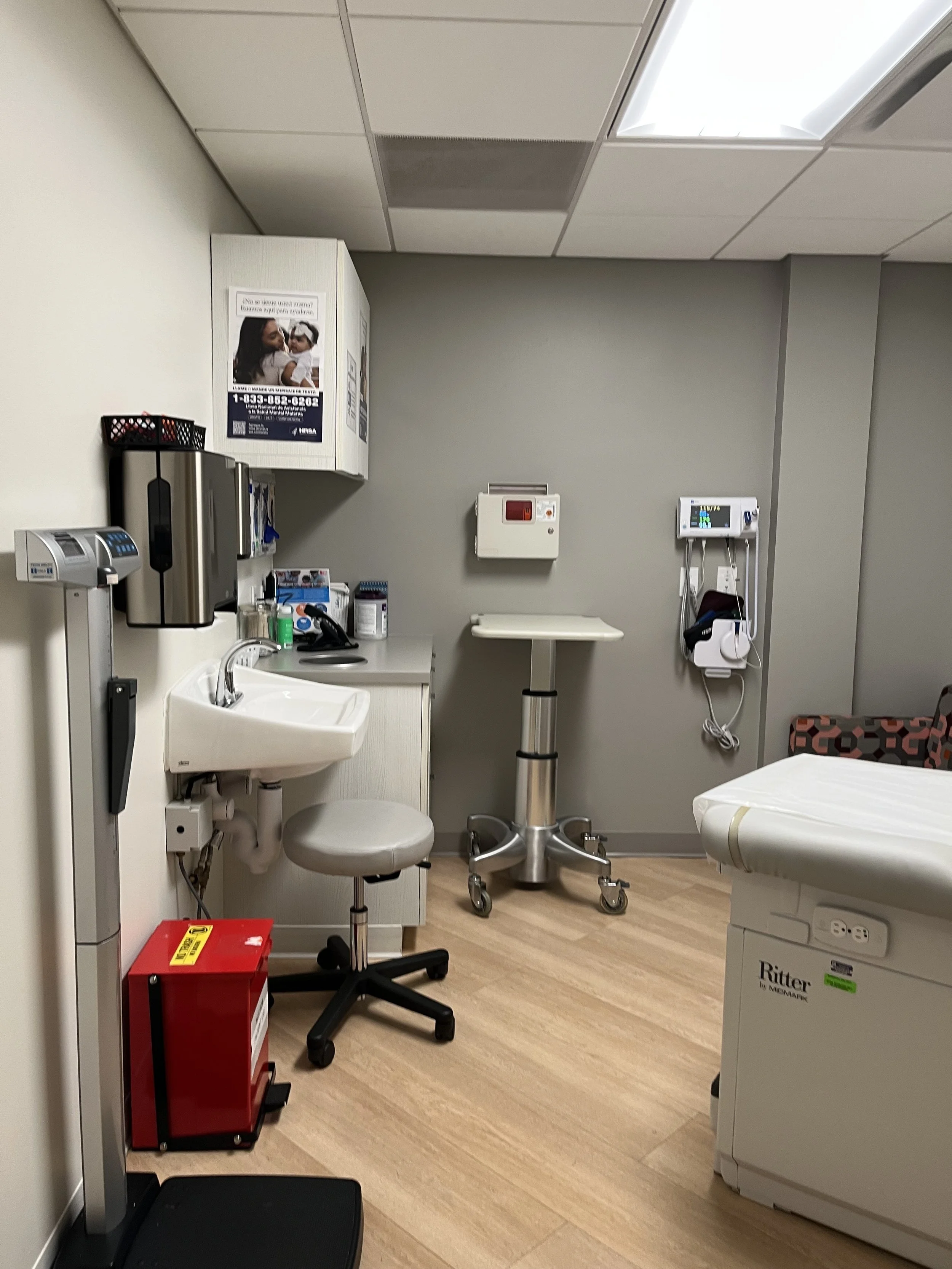
An exam room at Community of Hope.
Why is this issue important in DC?
DDC has a high maternal mortality rate—28.2 deaths for every 100,000 births in 2024. The national average is 23.5. We also have one of the highest preterm birth rates in the United States—11.8%.
2
This number is even higher—14.7%—for Medicaid patients. Preterm birth is associated with a number of complications from under-developed organs that can result in developmental challenges, hearing and vision problems, and a higher risk of cerebral palsy.
3
As almost half of DC births are covered by Medicaid, it is important to focus on improvements for this patient population.
4
What did we do?
In January 2025, the Centers for Medicare & Medicaid Services selected DC for their Transforming Maternal Health initiative. This ten-year grant focuses on whole-person care to enhance maternal health experiences and outcomes for District residents.
As part of the TMaH work we met with 18 Medicaid providers—physician groups, federally qualified health centers (FQHC), perinatal community health workers, and doulas—to map their patients' experiences from the first prenatal appointment through 12 months postpartum. These maps focused on when and how patients are screened and referred to support services and revealed ways to improve the patient experience.
What did we learned?
We found:
- Screening for mental health, tobacco/substance use, and health-related social needs is broadly happening across providers. However, the frequency varies widely.
- Very little screening and referral is happening in the postpartum period when we know the mental health of mothers is most vulnerable.
- The amount of referral support providers can offer patients depends on their staffing and billing model. FQHCs typically have care coordinators who can work one-on-one to help a patient get connected to things like public benefits or a therapist. But physician groups and doulas aren’t staffed for this level of assistance.
- Doulas are struggling to participate in Medicaid due to administrative burdens like Medicaid billing.
We encourage you to watch our 3-minute project summary video or our 17-minute presentation of findings (below) for more details on our findings.
What comes next?
Medicaid providers are using these journey maps with technical assistance providers to make improvements to screening and referral processes. These learnings will help DHCF prepare for the TMaH value-based payment model in 2029.
What happened behind the scenes?
As we met with providers, we got to tour many of DC’s healthcare facilities from OBGYN offices to DC hospitals to the District’s only birth center.
Presentation of findings
“We know that when we invest in maternal health, we are investing in stronger families, healthier communities, and a brighter future for our city.”
1 These largely focus on the patient’s housing, food/nutrition, transportation, and personal safety needs.
2Nasser Albarqi, The Impact of Prenatal Care on the Prevention of Neonatal Outcomes: A Systematic Review and Meta-Analysis of Global Health Interventions, 2025.
32025 March of Dimes Report Card: District of Columbia, 2025.
4Ipid.
5Mayor Bowser Announces $17 Million in Funding to Transform Medicaid Maternal Health, 2025.