
Department of Parks and Recreation
Families that live in District short-term housing shelters are offered free breakfast and dinner daily. Yet many residents do not regularly participate in these meals. We worked with the Department of Human Services (DHS), the Department of Parks and Recreation (DPR), and shelter providers to better understand why. Together with residents, we developed recommendations for changes to make dining at the shelter more appealing. We shared those recommendations with the providers who manage the dining programs at the shelters.
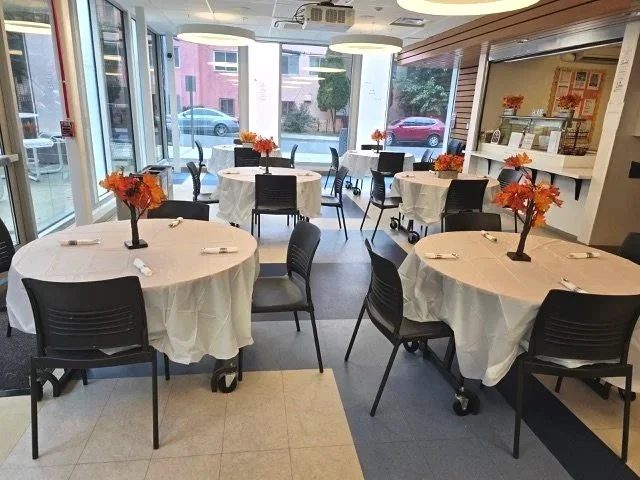
Dining room at The Horizon Short Term Family Housing Shelter. Tables are set with tableclotths and flowers. (Photo credit: DHS)
Why is this issue important in DC?
At any given time, up to about 300 families are living in short-term family housing offered by the District. These sites provide vital services, including food and lodging, as they work to help families secure permanent housing. For many families residing in shelters, finances are limited, work schedules are demanding, and kitchen space to prepare meals are not provided. Having access to healthy, free, and appealing meals offered by the shelter can help alleviate these stresses.
What did we do?
We talked with shelter residents to learn more about what barriers prevent them from eating the meals served at the site. Residents suggested potential changes to the meal program that might make them more likely to participate. We worked with DHS to prioritize the recommendations and share them with shelter providers.
What did we learn?
We heard from shelter residents about what they liked and disliked about the meals. Some told us that they ate the meals at the shelter every day, while others participated rarely. They said that scheduling, meal quality, menu options, and concerns about eating in a common dining space affected whether or not they participated in meals. Residents gave practical recommendations to improve the meal program, such offering more fresh fruits and vegetables and changing how meals were packaged to prevent them from getting soggy in transport from where food is prepared.
What comes next?
We shared what we learned about barriers to meal participation and resident recommendations with shelter providers. Shelter providers may use the recommendations to make changes to encourage more residents to participate in meals.
What happened behind the scenes? This work fits into the District’s broader efforts to strengthen meal programs. The Lab worked with DHS and DPR to secure federal funding through the Child and Adult Care Food Program (CACFP), which now reimburses the District for eligible meals served in CACFP-approved shelters to children and adults with disabilities. Using federal funds for these meals frees up local tax dollars for other investments to promote the health and wellbeing of District residents.
Between 2018 and 2021, Mayor Bowser transformed DC’s shelter system by closing DC General and opened seven short-term family housing shelters throughout DC’s wards. These new sites are designed to serve up to 50 families with private bedrooms and shared resources in the building—such as bathrooms, laundry room, a dedicated play space for children, computer lab, and an active communal dining room.
Double-click to edit...