
The District Department of Transportation (DDOT) employs approximately 200 safety techs, also known as school crossing guards. Safety tech shortages can put pedestrians at risk. The Lab and DDOT, in partnership with the George Washington University Corcoran School of Art & Design, researched the experience of safety techs to develop solutions that strengthen this essential workforce. Students found that a sense of belonging, community connection, discipline, a public service record are common among safety techs who have remained in their position for five years or more. DDOT is using these insights to inform recruitment strategies and strengthen relationships between safety techs and schools.
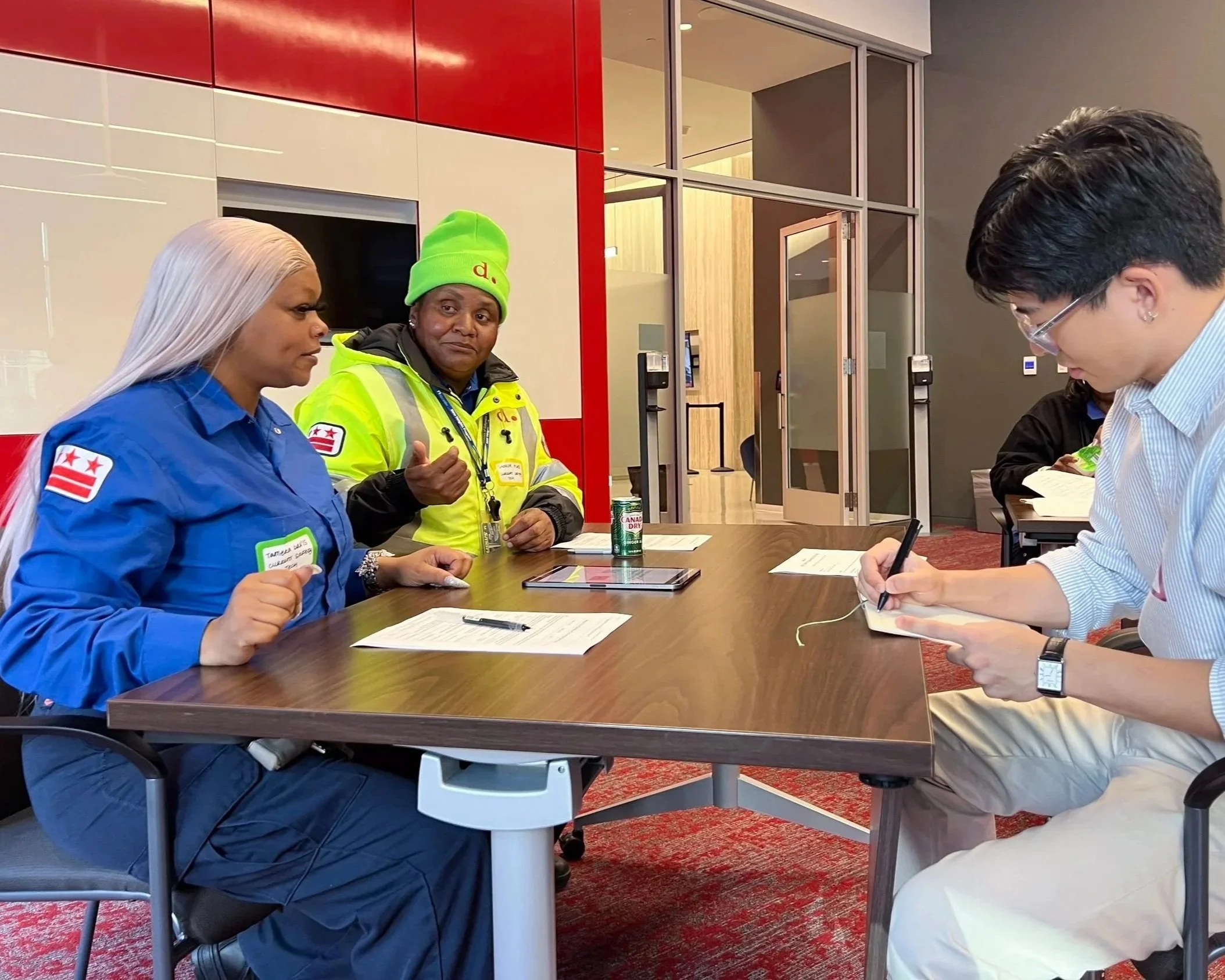
GW student leading a human-centered design activity with a safety tech and safety tech supervisor. (Photo Credit: David Andrews for DDOT)
Why is this issue important in DC?
Safety techs guide students and other pedestrians safely across intersections near schools. They also report unsafe driver behavior and hazardous street conditions to DDOT to inform traffic calming efforts and long-term safety planning. DDOT prioritizes high-risk intersections near schools for safety tech coverage. The role is demanding and requires physical and mental stamina. When safety techs leave their jobs, some crossings can go unprotected, and both children and adult pedestrians are at risk.1
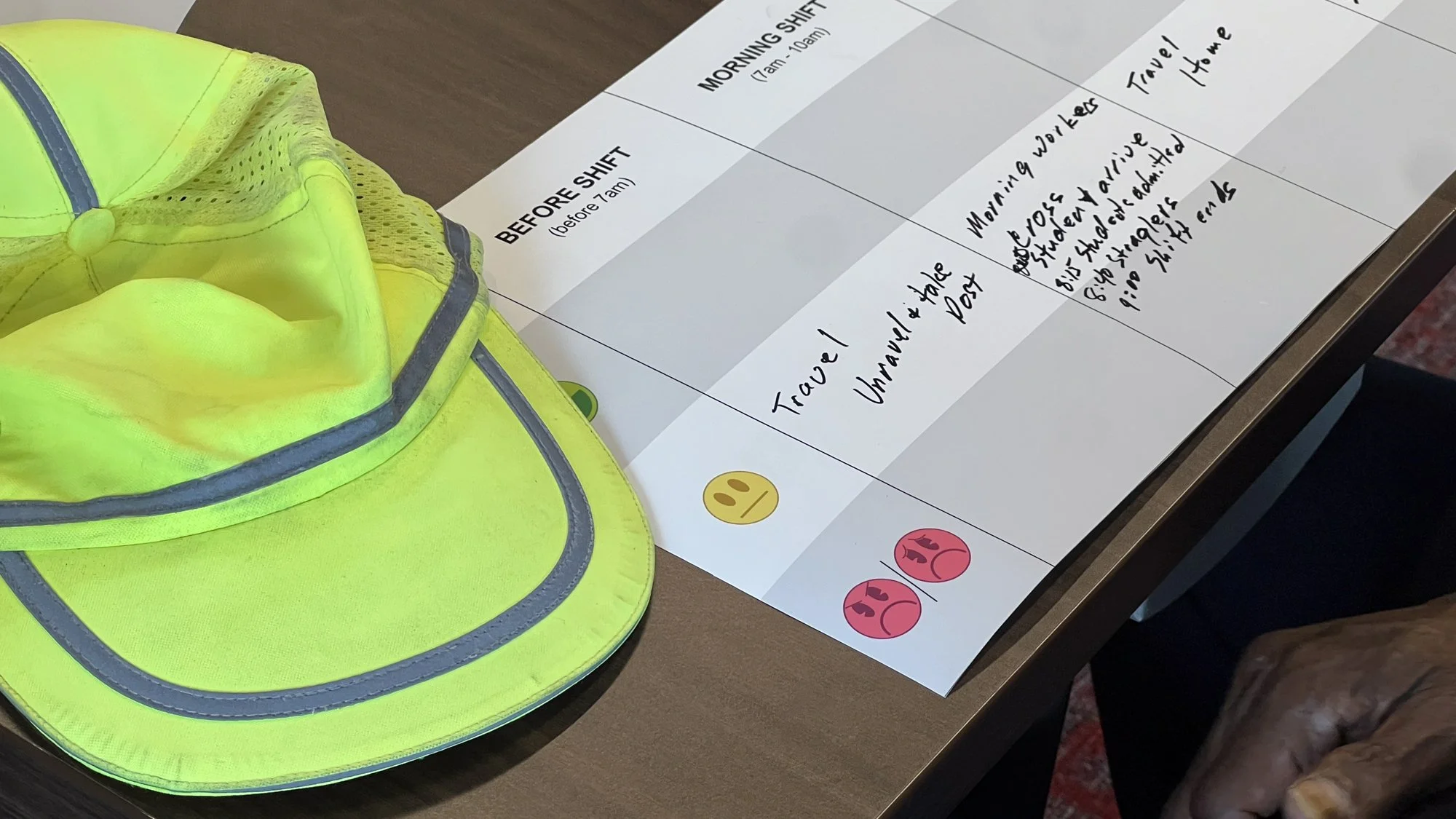
Safety tech experience map. (Photo Credit: David Andrews for DDOT)
What did we do?
We partnered with the Corcoran School’s Engagement Lab to understand the day-to-day experience of safety techs, particularly those who have stayed in the position for at least five years. This long tenure in a part-time, seasonal job demonstrates deep commitment to their communities. The Corcoran students observed safety techs at their posts in different wards, interviewed DDOT staff, and mapped their insights. They also led workshops with safety techs, community members, and school representatives to identify opportunities to strengthen the workforce.
What did we learn?
The students learned that long‑serving safety techs share certain traits, such as being disciplined and calm under pressure. They also frequently have a strong service record and stable work history. These traits help safety techs show a respectful, authoritative presence. Long-serving safety techs also reported feeling a strong connection to their school communities. The Corcoran students developed strategies and tools to help recruit candidates with these traits and build stronger relationships between safety techs and the schools they serve.
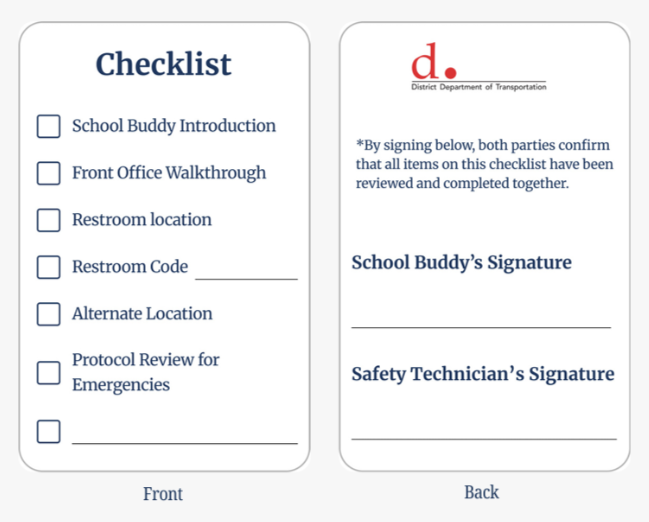
School – Safety Tech Starter kit prototype
What comes next?
DDOT revised its safety tech recruitment strategies, including the posting, outreach, and interview guide, using the students’ insights. The summer 2026 hiring effort brought in a record number of applicants. During the 2026-2027 school year, DDOT will test components of the students’ prototypes in schools. One example is a starter kit that standardizes onboarding to help schools and safety techs build strong working relationships.
What happened behind the scenes?
In July 2026, we convened a discussion group with five long-serving safety techs to learn where we should focus our recruitment efforts. They reviewed our hiring poster and shared helpful advice. They recommended asking veteran safety techs and schools to share the job posting, since they often get questions from residents about available jobs and are happy to help spread the word. They also spoke highly of the educational opportunities available through DDOT and suggested highlighting these benefits in recruitment materials. In addition, they recommended noting that safety techs can work extra hours during special events, such as July 4th, earning additional pay. This input helped shape updates to the safety tech outreach approach and recruitment efforts.
1 Pedestrian Safety | Vision Zero DC. Accessed December 2025.