
November 16, 2026
By: Katie O’Connell
Ten years ago, The Lab @ DC was two people and a grant. Not even a logo was agreed on.
This summer, more than 150 people packed the fifth floor of the MLK Library to mark what those two people helped start. Staff from roughly 30 District agencies, as well as partners from local universities, Metro, and Mayor’s Offices showed up. Some of them helped build The Lab. Some of them ran projects with us for years. Some of them, we suspect, came for the mingling and light refreshments—so often how good collaborations start.
Recap of The Lab’s 10th Anniversary event. (Credit: video by Oliver Olivo)
A decade by the numbers
We dug through our archives to help quantify our impact over the past decade:
Completed 62 large-scale projects
Partnered with 37 agencies and Mayor’s Offices
Improved 60+ District forms across 15 agencies
Ran 42 projects that directly affect low-income residents
Built 38 projects around two or more resident engagement activities
Brought on and trained 52 graduate students as research assistants
Grew from 2 staff to a full-time team of 8
Some numbers we like even better because they’re directly meaningful to residents:
We’ve contributed to making DC’s housing voucher application 40% shorter;
Reduced the number of trips needed for residents with mobility limitations to apply for reserved parking by 60%;
Helped pilot a program that currently supports more than 10,000 Washingtonians with low incomes ride Metro for half price;
Helped provide $7M in food benefits to 58,000 students in one summer; and
Provided evidence that led to a 4x budget increase for an effective housing subsidy.
Together, these milestones reflect a decade of meaningful, measurable progress toward making services more accessible, equitable, and effective for the residents who rely on them most.
A unique model
We don’t say this often enough, so let’s state it plainly. In 2016, The Lab was one of the only teams focused on evidence-based policy making embedded inside a state or local government. Not a university partnership. Not a team of consultants. We were public servants sitting inside government, asking hard questions and committed to District residents.
We also were the first of government-embedded teams to combine data and social science with human-centered design. Ten years later, there are about a dozen teams around the U.S. that fit that description, and we’ve had the honor of advising a good number of them.
The advantages of being inside government? Knowing your residents, the established systems, working hands-on with frontline staff, legal teams, and leadership heightens our ability to make meaningful impacts to better serve Washingtonians. We also use learnings to advocate for evidence-based governing in the budget process each year. Our work doesn’t end with a slide deck or report that no one ends up using. We go the extra mile to put new tools and research results into action.
The event itself
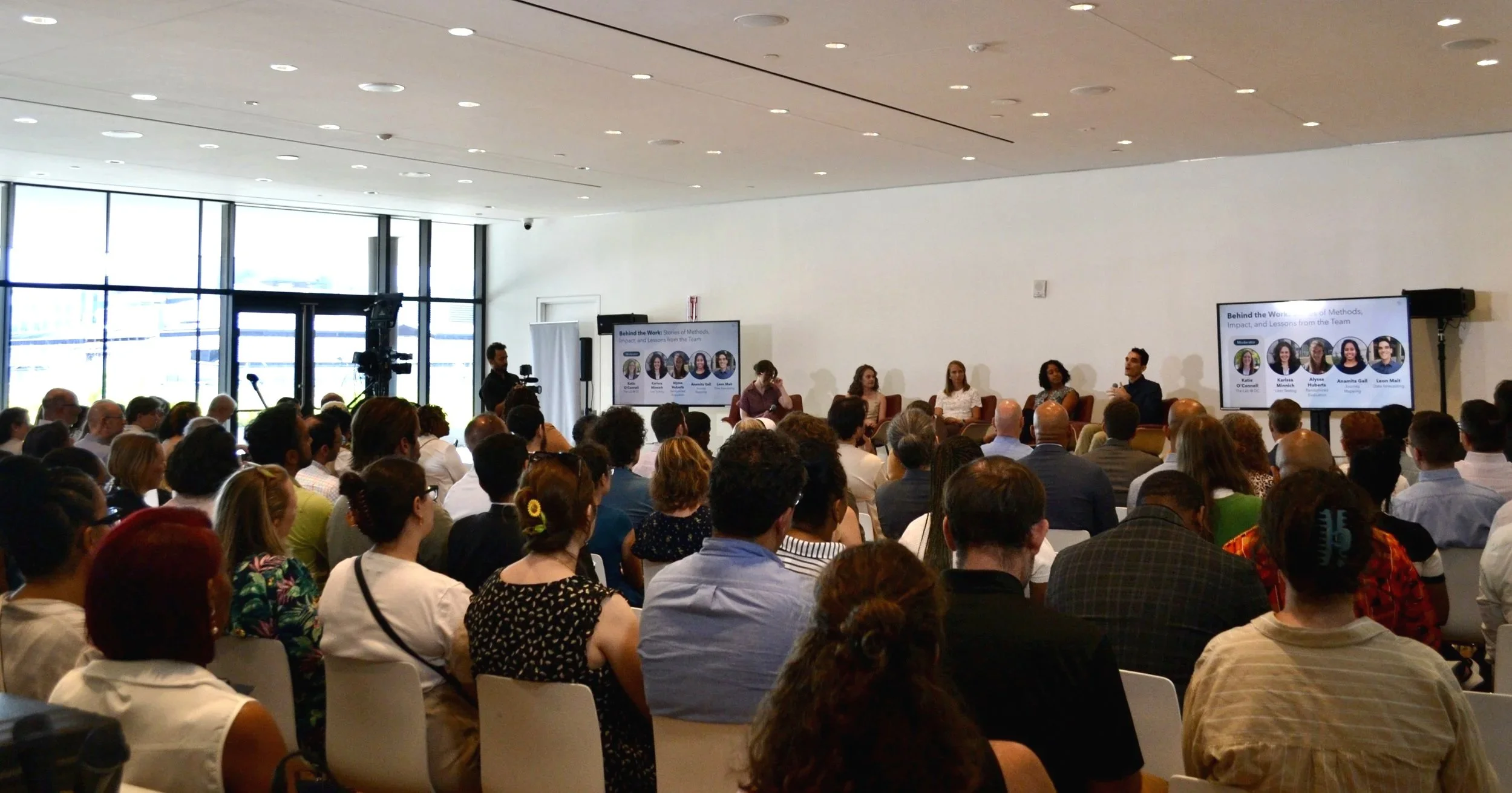
DC Government staff attending The Lab @ DC’s 10th Anniversary event in 2026 (Credit: The Lab @ DC)
On a beautiful summer day in 2026, we gathered with colleagues to celebrate our 10 years of impact and to inspire more work to come. Deputy City Administrator Jenny Reed shared The Lab’s origin story, and Lab Deputy Director Lindiwe Rennert followed with a tour of who we are and what a decade of this work has added up to. Mayor Bowser stopped by to share a few words, including a sentiment we hold close to our hearts, “I especially hate forms that don’t make sense.” Same, Mayor. Same.
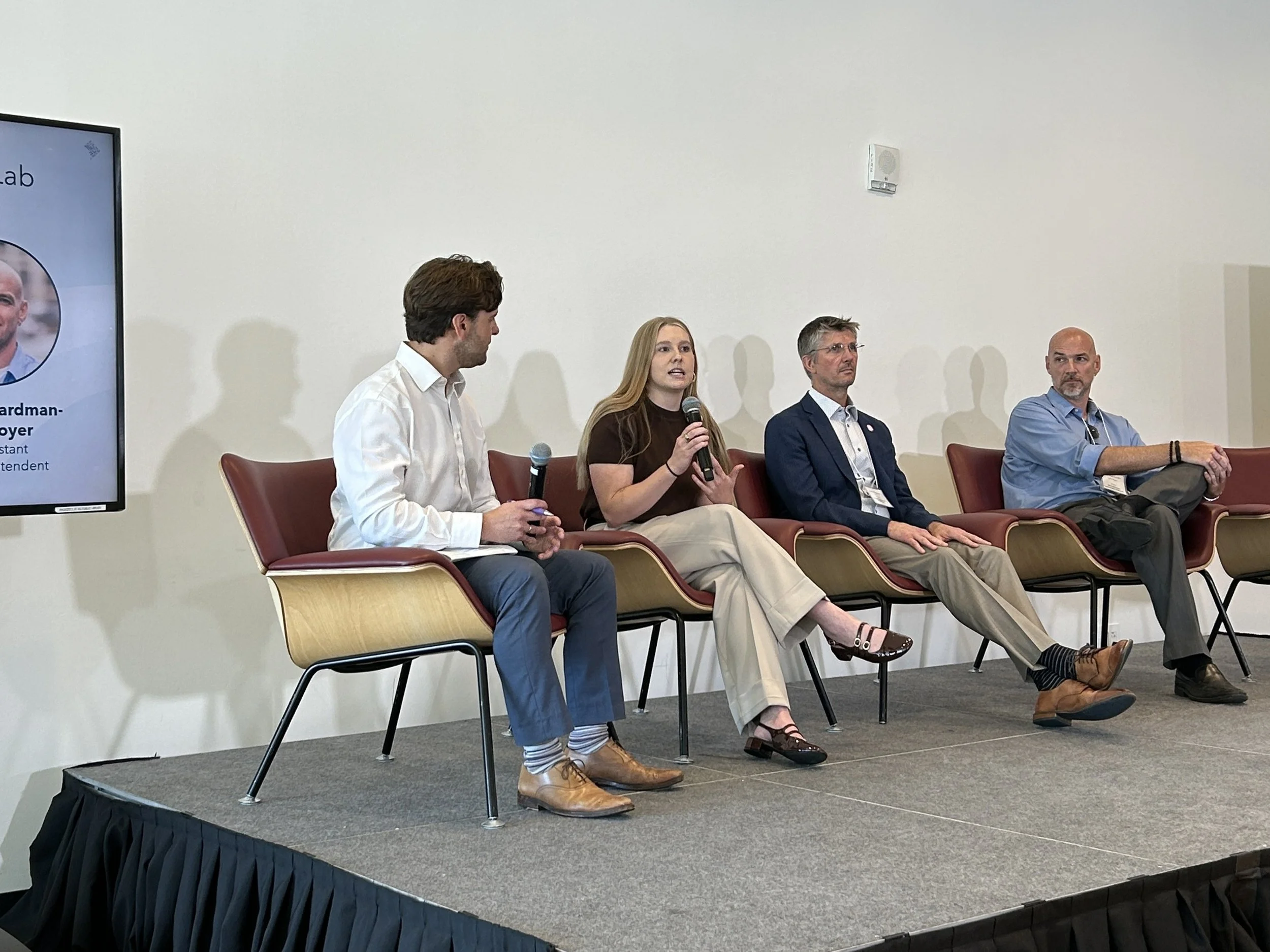
"Agency Voices" panelists. (Credit: DHS)
We led two panel discussions. In “Behind the Work,” Lab staff talked through the methods behind the projects—randomized evaluation, user testing, journey mapping, forecasting—and explained how we overcome common challenges in each.
In the “Agency Voices” panel, we handed the microphone to people we’ve had the privilege of partnering with including Madison Johnson (Dept. of Human Services), John Thomas (District Dept. of Transportation), and Killin Boardman-Schroyer (Office of the State Superintendent of Education). These panelists talked about their experiences partnering with The Lab to build a pathway for residents to keep SNAP benefits through volunteering, stand up The Lab @ DDOT, and support high schoolers in advanced career and technical education. Their throughline: a close partnership produces better answers for District residents.
The last hour was a showcase—a poster session with Lab staff and agency partners standing next to seven project spotlights. For fun, attendees de-scrambled program acronyms (harder than it sounds), took a red pen to a genuinely bad government form (deeply satisfying), and scrolled a tablet with a timeline of every project we’ve completed since 2016.
What’s next?
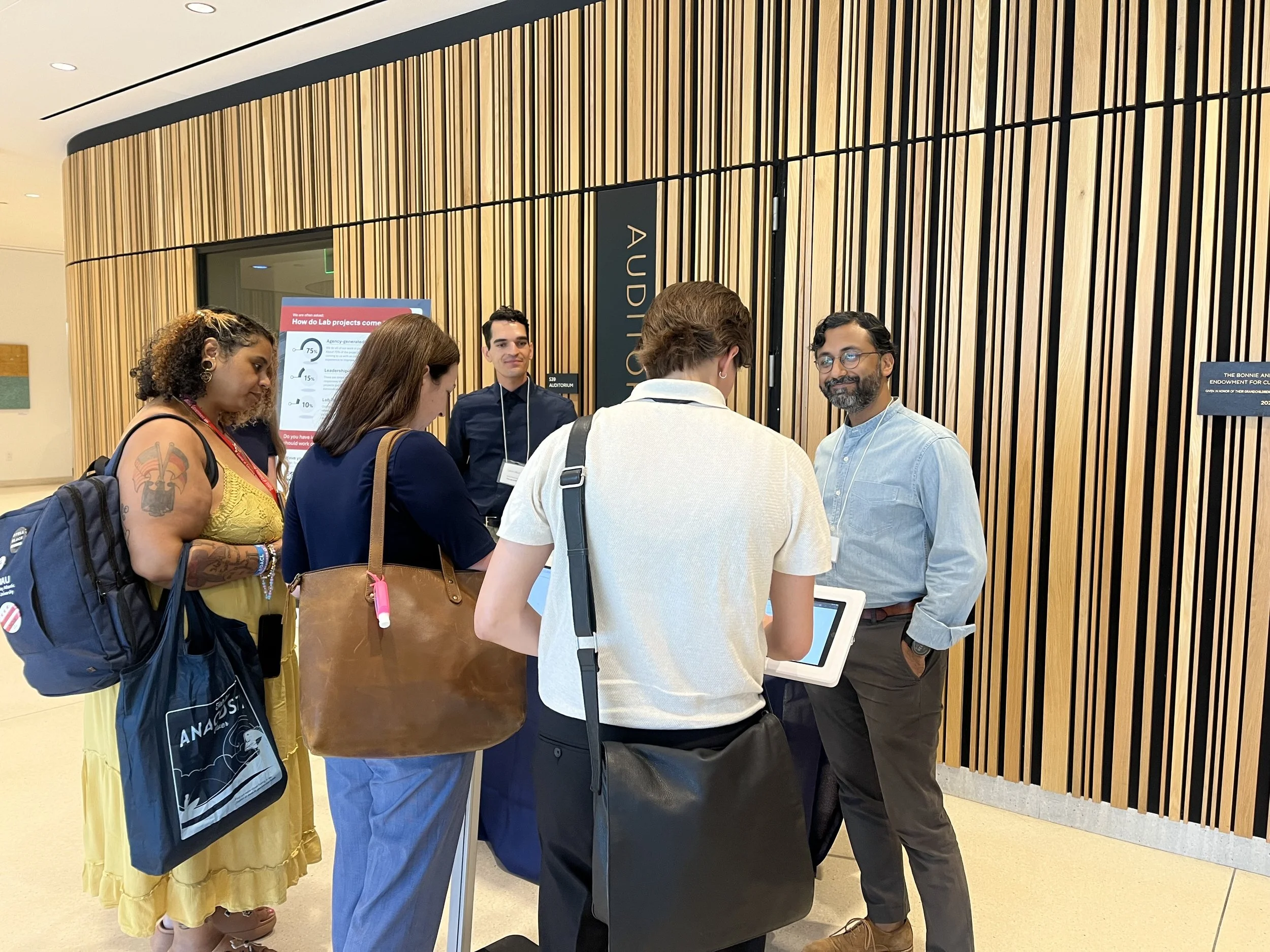
DC government staff attending a showcase of The Lab's work (Credit: The Lab @ DC)
We also set out a station asking a simple question: what question should we ask next? About two dozen ideas came in. That question wasn’t rhetorical, and it isn’t closed. If you live or work in DC and there’s a question you want us to tackle, get in touch with us. We’re already planning work on some of the ideas we’ve received. We can’t take on everything, but when we have capacity and see a path to answering that question well—we will.
Over the past decade, The Lab @ DC has become a critical piece of how DC government delivers for its residents. We’ve answered more than 50 of DC’s toughest questions. Along the way, we’ve found friends and colleagues across dozens of agencies and transformed how District leaders think about service design and evidence-based governing. And while there’s still smoldering debate around our logo, we’re focused on bringing more wins to DC over the next 10 years.
Want a trip down memory lane?
Below are a few of the favorite questions we’ve answered over the years: