
Criminal Justice Coordinating Council
Taking care of youth navigating the criminal justice system is important and complicated. A large part of doing that well is making sure the District has the appropriate amount and types of resources to support effective juvenile justice planning. This requires anticipating resource needs well in advance. We worked with the Department of Youth Rehabilitation Service (DYRS) and the Criminal Justice Coordinating Council (CJCC) to fine-tune a population forecasting model. This tool will support DYRS in making evidence-informed decisions as they manage space capacity.
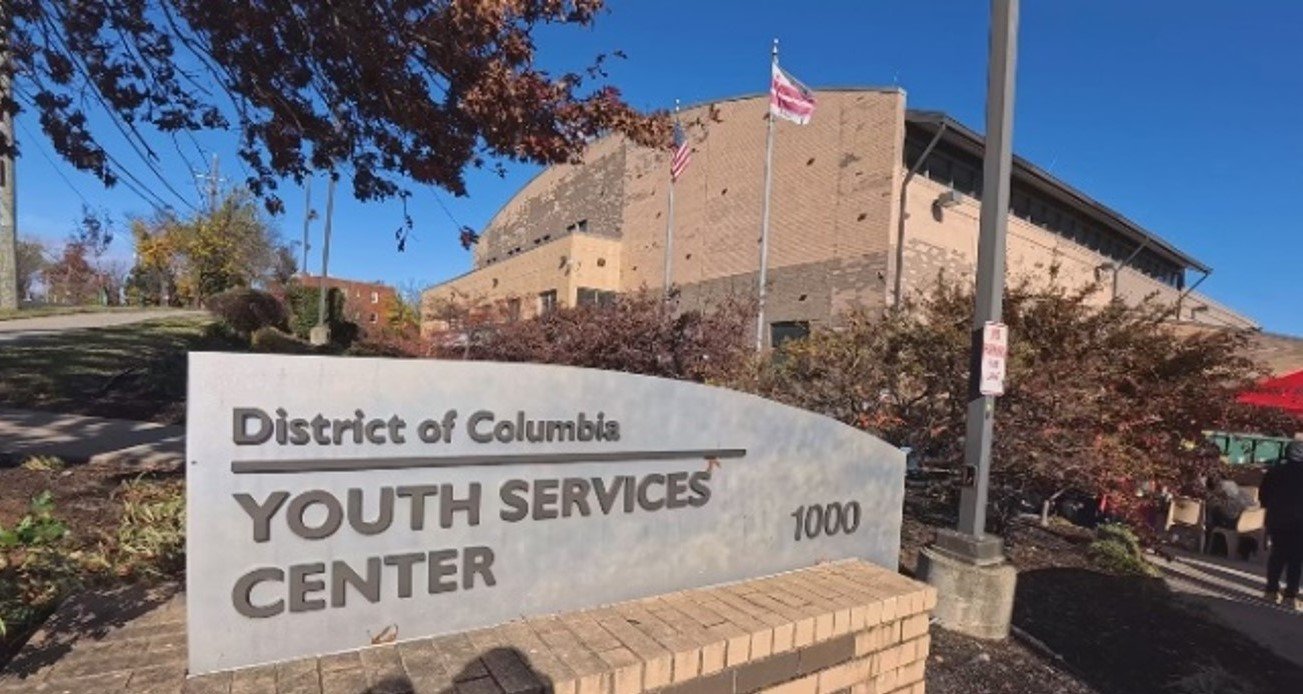
DC youth services center (Photo credit: DYRS)
Why is this issue important in DC?
Over the last five years, on any given day, it was not uncommon for more than 250 court-involved youth to need housing in the District. Tools that provide DYRS with estimates of the number of young people likely to need accommodation in shelter homes and DYRS-secured facilities can help prevent overcrowding and optimize staffing plans.
What did we do?
We looked at how other counties and states estimate the number of people that will engage with their court systems each year. Drawing from both forecasting literature and these examples, we developed a series of models for DC. These models use data from prior years to estimate how many young people will likely be detained in DYRS secure facilities, committed, or placed in shelter homes.
What have we learned?
Given the type of data that DYRS has readily available, we found that an ARIMA (Auto-Regressive Integrated Moving Average) model was well-suited to the task. This model works by identifying patterns, trends, and recurring fluctuations in a sequence of numbers and projects those patterns forward in time based on a set of parameters.
We built and tested several ARIMA models by comparing their projected 2025 daily population counts to actual counts from that year, using daily data from 2022–2024. We evaluated how well each model predicted the number of youth in shelter homes, detained, and committed youth. After identifying the best‑performing model, we used it to project 2026 populations. These forecasts provide a reliable population range that helps DYRS plan for the number of beds needed on most nights of the year and supports budgeting and resource allocation decisions.
What comes next?
DYRS will use the tool The Lab developed to inform its capital and operating budgetary decisions. We will keep track of the DYRS population census in the coming years to assess the accuracy of our predictions.