
Fires in the home threaten lives and can disrupt entire communities. DC Fire and EMS helps keep people safe by installing smoke alarms and sharing safety information, including by going door-to-door to offer help. Not every neighborhood has the same risks and vulnerabilities. DC Fire and EMS want better tools to understand neighborhood fire risk and how it interacts with other factors that could make fires more devasting when they occur. We are creating a neighborhood‑level fire vulnerability tool that builds on modeling by the Red Cross and our commercial building fire risk model. We will add richer DC data and evaluate and adjust the existing models to highlight where home fires and fire injuries are more likely. This insight will help DC Fire and EMS plan smoke alarm installations and make sure that outreach efforts prioritize more vulnerable neighborhoods from across the city.
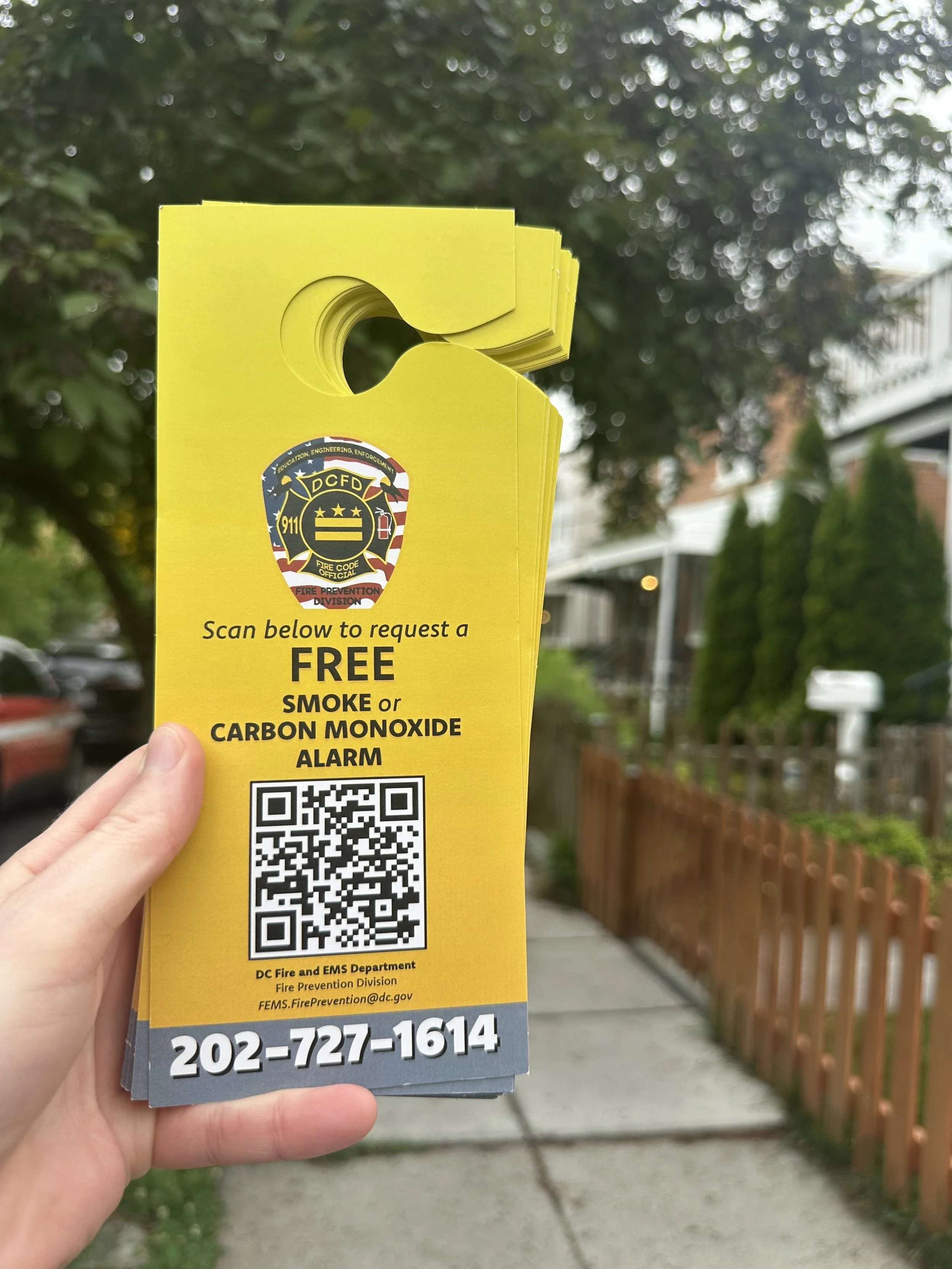
A door hanger used by DC Fire and EMS to promote fire safety at home. Photo Credit: The Lab @ DC
Why is this issue important in DC?
DC responds to over 30,000 fire‑related calls every year. 1 Home fires kill and injure, displace families, damage property, and create financial and emotional hardship. Fires are not evenly distributed around DC. Neighborhoods and residents that face greater levels of social and economic vulnerability also are often exposed to greater fire risk. But there are things residents can do to reduce their exposure to risk, and DC Fire and EMS wants to help. Taking steps to make your house as safe as possible and learning how to avoid common risky situations help to avoid fires. Research shows that initiatives to check and replace missing or broken smoke alarms reduce fatal fires by alerting people to fires early, when they have the best chance to get out. 2 Fire and EMS must decide how to spread their prevention and outreach efforts equitably and effectively across DC.
What are we doing?
We are creating a neighborhood‑level fire vulnerability tool. It builds on our previous commercial building risk model and a national home fire risk model developed by the Red Cross. We’ll extend the Red Cross’s work with additional DC data to better reflect housing patterns, resident vulnerability, and fire history in the District. To make the model easy to use for planning, we are developing a map‑based planning tool that displays neighborhood risk and helps identify where outreach may have the greatest impact.
What have we learned?
We expect to share learnings in 2027.
What comes next?
We will build and test a DC-specific model of neighborhood fire risk. We’ll also work with DC Fire and EMS to make sure the tool is easy to use.
What happened behind the scenes?
We’ve continued traditions we started when working on other projects with DC Fire and EMS. These include knocking on doors as part of fire safety outreach efforts and regularly working from their office. While at their office, we saw staff flip between multiple information dashboards, pull up PDF documents and click through Google Street view to plan upcoming door knocking. It reminded us of how important it is that our planning tool be easy to use. At a minimum, the tool should not add more complexity. It’d be most useful if it reduces the steps staff have to take and places they have to go to get the information they need.