
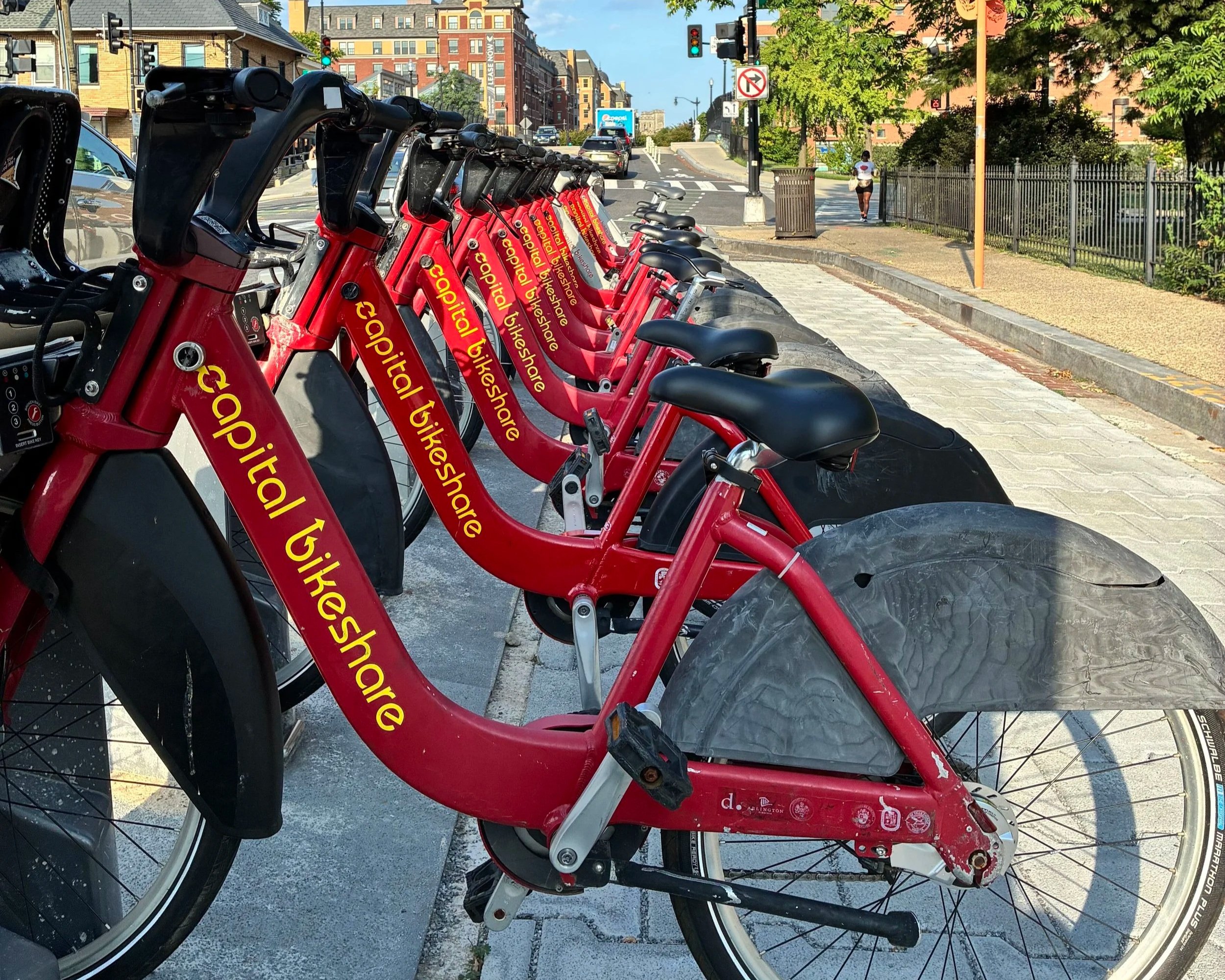
Capital Bikeshare (CaBi) provides a convenient, low-cost way to travel throughout the District, Maryland, and Virginia. Each year, tens of thousands of people rely on CaBi to commute, connect to transit, run errands, and explore the region. As the system grows and operating costs increase, CaBi is committed to providing accessible, affordable, and reliable service. In August 2025, the prices changed so the program can remain financially sustainable. We want to understand how these changes influenced the number of trips people took with Capital Bikeshare in the year after the change. The findings will help inform policymakers and help set future prices to support access and long-term sustainability.
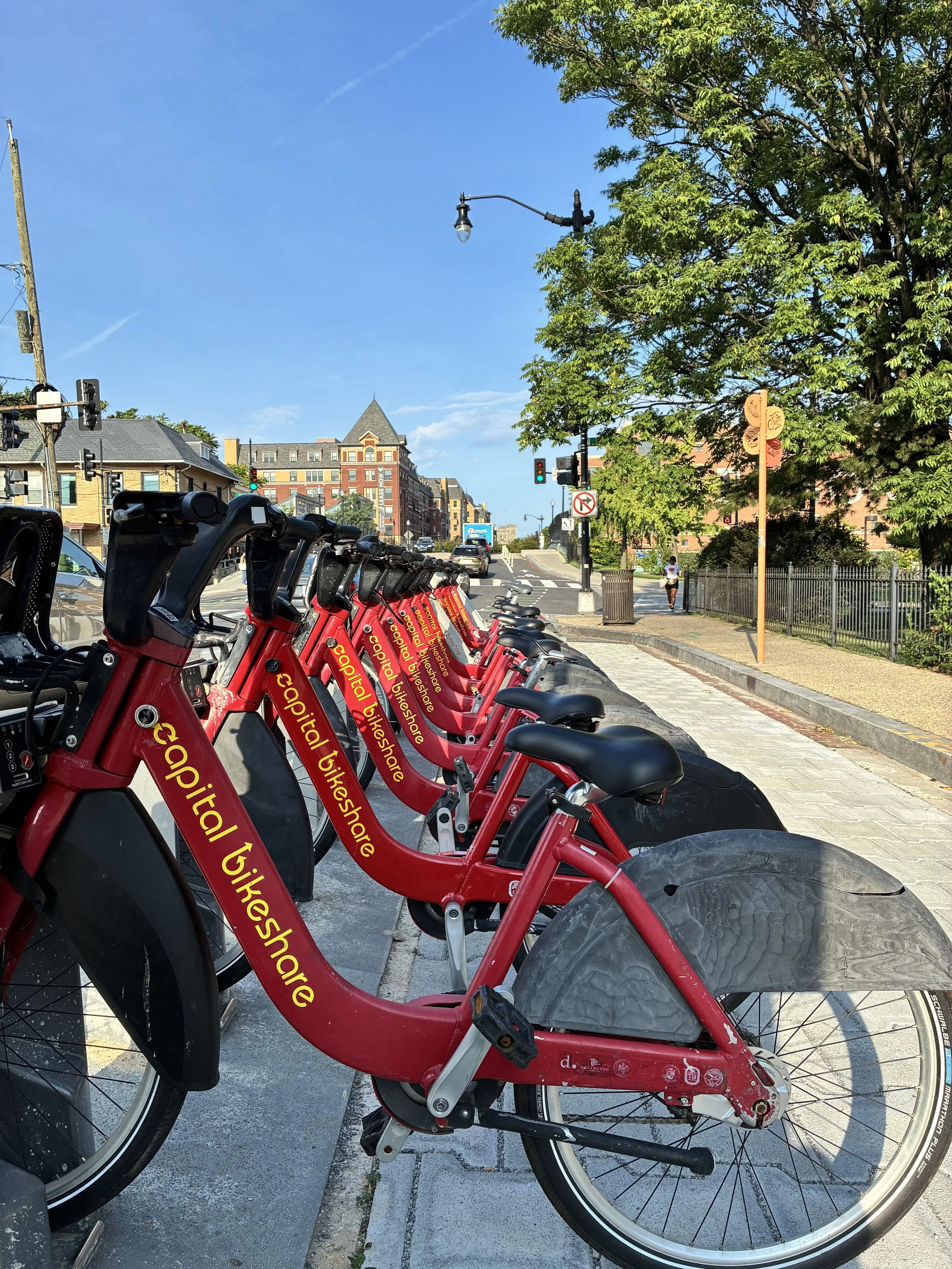
Capital Bikeshare bikes parked at a station.
Why is this issue important in DC?
With Capital Bikeshare, riders rent a bike for one trip. It gives riders a low-cost, convenient, fast, and environmentally friendly option for travel. Over time, running the system has become more expensive. Raising prices contributes to financial sustainability for the program, but the change may have also influenced how riders use the bikes, especially for lower-income riders who may depend on it as an affordable travel option. Past studies use surveys to ask travelers how higher prices would affect their behavior, but people often struggle to accurately predict their own choices and most bikeshare systems are expanding too quickly to just compare trends over time.
What are we doing?
We use bikeshare trip data to understand how the trips people took in the year after the price change compare to how they might have ridden if prices stayed the same. We are using a quasi-experimental method called a ‘synthetic control.’ We will combine data from other North American cities to estimate how many trips people in DC would have taken without the price change. This helps us determine how much of the change was due to the new prices rather than other factors. We will look at how the changes impacted program revenue.
What have we learned?
We expect to have results in 2027.
What comes next?
Our results will help us to understand how riders respond to price changes. This may also help policymakers adjust prices up or down in the future.